
Dunwoody, GA · Garage Door Service
Why So Many Dunwoody Garage Doors Predate Insulation Rules
Dunwoody homes built mostly in the 1960s-70s have garage doors predating insulation codes. See what that means for cold-weather performance and repairs.
- Repairs & new doors
- Springs & openers
- Serving 7 nearby communities
What Local Conditions Do
Dunwoody falls in a cold-moderate climate band, and that matters more here than homeowners usually think when it comes to the garage door. A cold-moderate winter doesn't bring the deep freezes you'd get further north, but it's enough that an attached garage with an uninsulated door runs noticeably colder than the rest of the house, and that cold transfers through the shared wall into whatever room sits next to it - often a laundry room or a bedroom over the garage.
The houses across this area were mostly built between 1951 and 2007, with the median landing around 1978. That range covers decades before any insulation requirement applied to residential garage doors. A door installed when a house went up in 1968 or 1975 is a single layer of steel or wood with no thermal break and no foam core - it was never built to hold heat in, because nobody asked it to at the time.
So you end up with a mismatch: the climate calls for some insulation value, but the housing stock predates any rule that would have put it there. That's the actual local condition driving this page, not a general claim about garage doors needing upgrades. It's specific to when these houses were framed and what code existed - or didn't - at that moment.
The Situation
Across the roughly 25 named areas that make up this service territory, the stock is overwhelmingly 1960s and 70s construction. That's not a guess - it's the pattern in the data, and it lines up with what you see driving through any of these neighborhoods: brick ranches and split-levels with the original garage door still hanging on the original track, sometimes the original opener bolted to it.
The nearby areas tell the same story. Doraville sits three miles off, Chamblee four, North Brookhaven three to the southwest, Ashford Park five miles south - all built out in roughly the same postwar wave. This isn't a Dunwoody-only quirk; it's a whole corridor of houses from the same era, which is exactly why the uninsulated original door shows up so often on service calls in this stretch.
With 56,735 owner-occupied houses across the service area out of 144,349 households total, a meaningful share of those owner-occupied homes are sitting on doors that have never been touched since installation. Some have had an opener swapped or a spring replaced, but the door itself - the actual insulated-or-not panel - is often original. That's the situation we're actually working against: old doors, a climate that notices the difference, and a lot of houses built in the same twenty-year window.
Where People Go Wrong
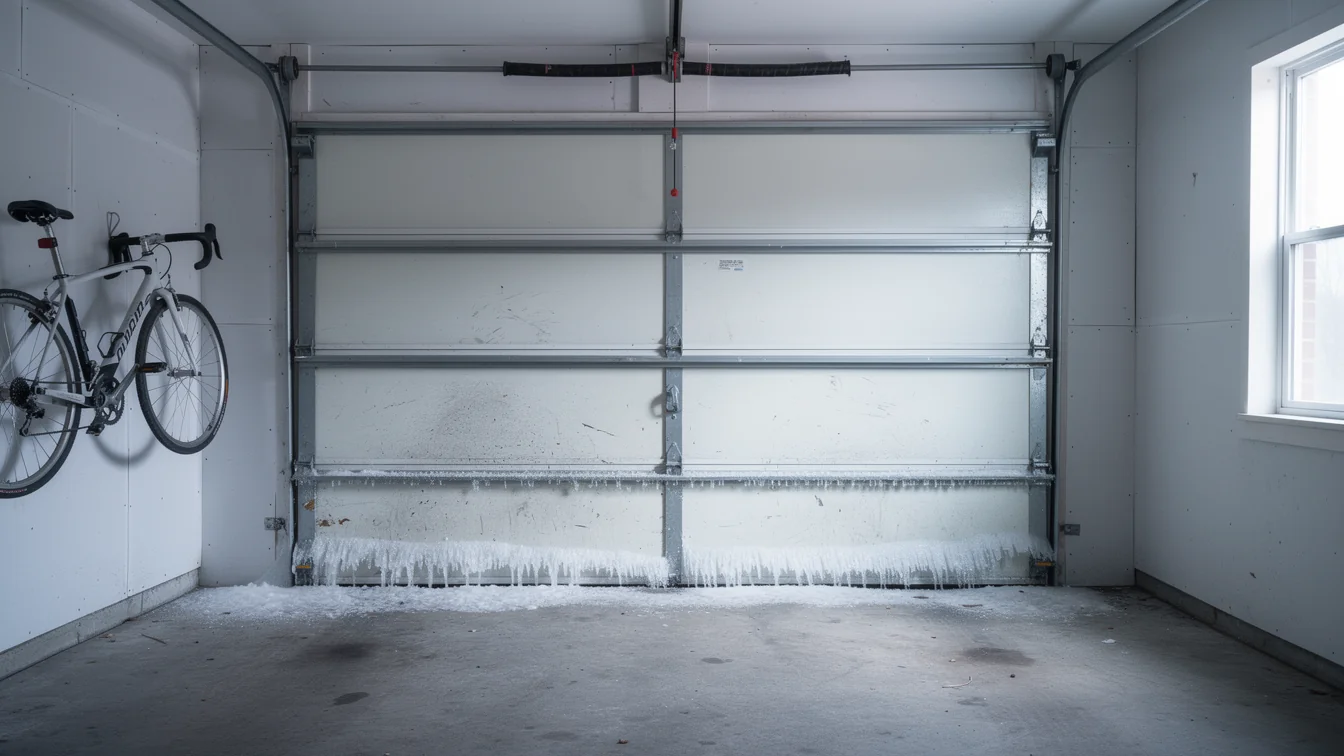
The most common mistake is insulating everything else in the house - attic, walls, even the garage ceiling - and never touching the door itself, because it doesn't look like a problem until winter heating bills show it. A single uninsulated steel panel door is still the weakest point in that wall no matter what else you've upgraded around it.
The second mistake is buying a cheap foam insulation kit and sticking it to the inside of the original 1960s or 70s panel. On a door that old, the panel is often warped slightly or the seams have gapped over fifty-plus years of use, so the foam kit covers the panel but does nothing about the air leaking around the edges, at the bottom seal, or through the old weatherstripping channels. You end up spending money without actually fixing the draft.
The third mistake, and the one we see cost the most: replacing the door but not checking whether the track and jamb, built to the dimensions and tolerances of a house from that era, can actually carry a heavier insulated panel without binding or pulling at the header. An insulated door weighs more than the single-layer original, and the spring and hardware sized for the old door won't necessarily carry the new one safely.
What to Look At First
Start at the bottom seal and the side weatherstripping, since on a door that's been in place since the 1960s or 70s, that's almost always worn thin or cracked, and it's the cheapest fix with the most noticeable effect on draft. Next, look at the panel itself for any flex or give when you press on it - a single-layer steel or wood panel with no insulation will flex more than a modern insulated one, and that flex is also where cold moves through fastest.
After that, check the track and the hinges for play. On original hardware this old, the rollers are often the original steel type, not nylon, and they're noisier and rougher-running than what's standard now, which is a separate issue from insulation but usually shows up at the same time.
Here's the honest limitation: we can't always tell you whether your jamb will take a heavier insulated door without opening things up and measuring, and sometimes the answer is that the frame needs reinforcing before a full replacement makes sense. If that's the case, patching the seals and weatherstripping on the existing door is the better short-term move rather than forcing a heavier door into an opening that wasn't built for it.
Frequently asked questions
Why does my Dunwoody garage door feel so cold in winter even though the rest of the house is insulated?
Most houses here were built between 1951 and 2007, with a lot concentrated in the 1960s and 70s, before any insulation standard applied to garage doors. If your door is original, it's a single uninsulated panel, and in this area's cold-moderate climate that shows up as a noticeably colder garage and a draft into any room next to it.
Will a foam insulation kit fix an older uninsulated door?
It helps a little but usually doesn't solve the real problem. On a door that's fifty-plus years old, the seams and weatherstripping have typically loosened more than the panel insulation matters, so air still leaks around the edges and bottom seal. Fixing the seals first is usually the better move before spending on a kit.
Can I just replace my old door with a modern insulated one?
Often yes, but not always without checking the track and jamb first. Houses from the 1960s-70s era were framed for a lighter, single-layer door, and an insulated replacement weighs more. We can't say whether your opening needs reinforcing without measuring it directly - that's a real limitation, not something we can guess at from the house's age alone.
Related garage door services in Dunwoody
More garage door guides
Book garage door service in Dunwoody
Call now or request a quote - tell us what the door is doing and where you are.