
Dunwoody, GA · Garage Door Service
Weather Seals and Drafts in Dunwoody Garage Doors
Why Dunwoody's 1960s-70s housing stock and cold-moderate winters wear out garage door weather seals early, and what to check before you call for a repair.
- Repairs & new doors
- Springs & openers
- Serving 7 nearby communities
What Local Conditions Do
Dunwoody sits in a cold-moderate climate band, which means the garage door seal on your house goes through real freeze-thaw cycling every winter without the deep, sustained cold that forces builders elsewhere to over-spec hardware. That in-between pattern is hard on rubber. The bottom seal and the side weather seal flex daily as temperatures swing, and vinyl that was fine in July turns stiff and cracked by February. Most of the housing in this service area was built between 1951 and 2007, with a median build year of 1978, and a lot of that stock clusters in the 1960s-70s range across the 25 or so named areas nearby. Doors from that era were not built with the compressible bulb seals you see on newer installs - they used flatter, thinner gasket material that compresses permanently after a few seasons and stops sealing at all. If your door or frame dates from that window, the seal doing the work now is probably a replacement already, and it may be the wrong profile for the original track. That mismatch is where drafts start, not just worn rubber.
The Situation
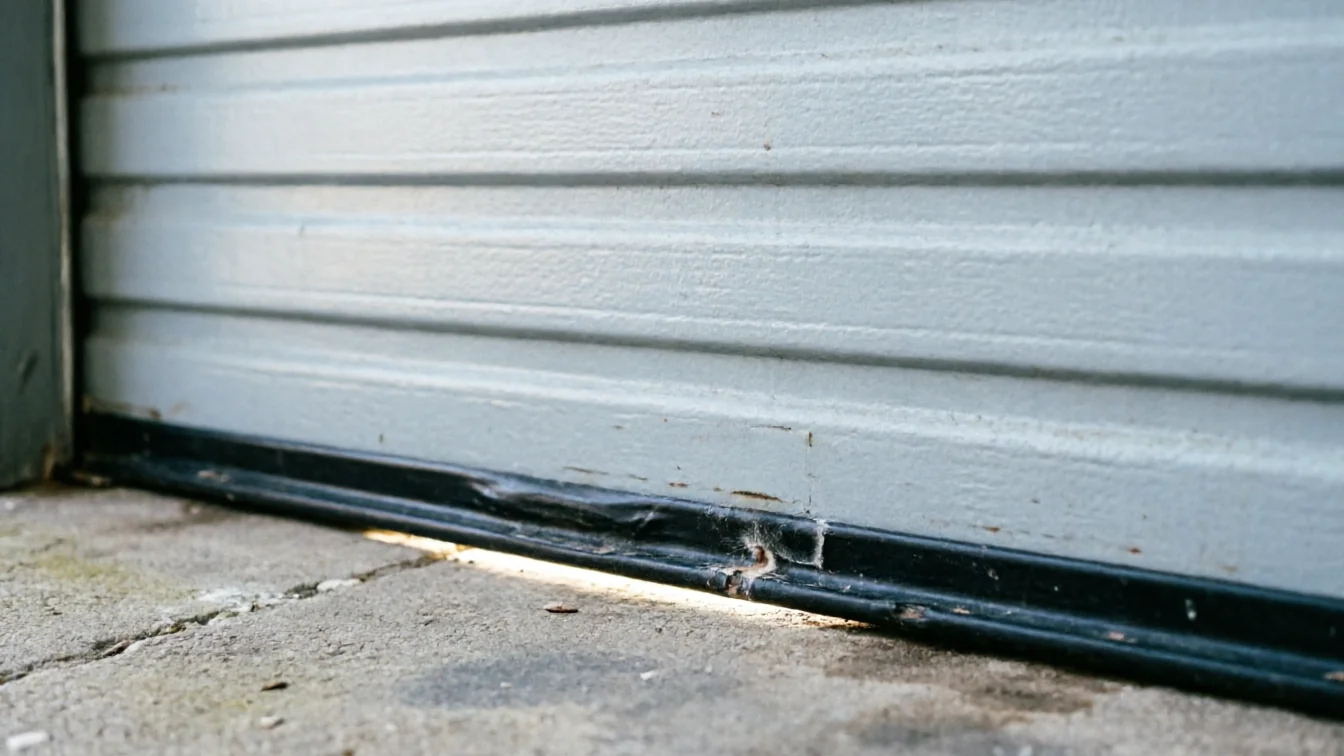
A draft under a garage door rarely shows up as one obvious gap. On the 1960s-70s builds common here, the slab often settled slightly over fifty-plus years, so the bottom seal that was cut straight when the house was new is now sealing against a floor that is not level. You get a quarter-inch gap on one side and a tight seal on the other, and the quarter-inch side is where cold air and water get in. On the newer end of the 1951-2007 range, the issue is more often the seal itself giving out before anything else does - vinyl that has done twenty or thirty winters of cold-moderate cycling and just lost its flex. Either way, the fix depends on which problem you actually have, and that's not something you can tell from inside the garage with the door down. You have to watch the seal compress while the door closes.
Where People Go Wrong
The most common mistake is buying a universal seal kit and nailing it on without checking the track profile first. Doors from the 1960s-70s stock in this area often use a retainer groove that newer seal kits don't match exactly, so the new seal sits loose, flaps in wind, and lets in more air than the cracked one it replaced. The second mistake is treating a gap as purely a seal problem when it's actually a settled slab - you can put on the best seal available and still have a draft because the floor underneath has shifted out of level. People also skip checking the side seals entirely and only replace the bottom one, which misses where a lot of the cold air actually comes in on an older frame. None of this is complicated work, but it's sequence-dependent: fix the wrong thing first and the draft just finds the next weak point.
What to Look At First
Close the door and run a hand along the bottom seal from one side to the other - feel for where it's firm against the floor and where it lifts, even slightly. That tells you if the problem is the slab or the seal. Next, check the side and top seals where they meet the frame; on houses built before the 1980s, these are often the original flat gasket style, and if they've gone hard and brittle, that's your draft source even if the bottom looks fine. If the gap is uneven across the bottom, measure it at both ends - more than a half-inch difference usually means a leveling fix, not a seal swap. One honest limitation: if the slab has settled more than an inch or so, no seal is going to solve it, and that's a floor or threshold conversation, not a weatherstripping one. We can tell you which one you're dealing with once we've looked at the door in person.
Frequently asked questions
Why does my garage door seal wear out faster here than seals on other parts of my house?
The bottom seal flexes every time the door opens and closes, and Dunwoody's cold-moderate climate means it's cycling through freeze-thaw swings most of the winter. That constant flexing combined with temperature change breaks down vinyl faster than a seal that just sits static, like window weatherstripping does.
My house was built in the 1960s - is that why the seal doesn't fit right anymore?
Possibly. A lot of the housing stock in this area dates to the 1960s-70s, and doors from that period often used a narrower retainer track than what universal seal kits are made for today. If a seal was swapped at some point without matching the original groove, it may never have sealed properly.
Can I just add a second seal on top of the old one?
No - doubling up seals usually makes the door bind or not close fully, which creates a bigger gap than you started with. The old seal needs to come out of the track before a new one goes in, and if the track itself is worn, that's a separate repair.
Related garage door services in Dunwoody
More garage door guides
Book garage door service in Dunwoody
Call now or request a quote - tell us what the door is doing and where you are.