
Dunwoody, GA · Garage Door Service
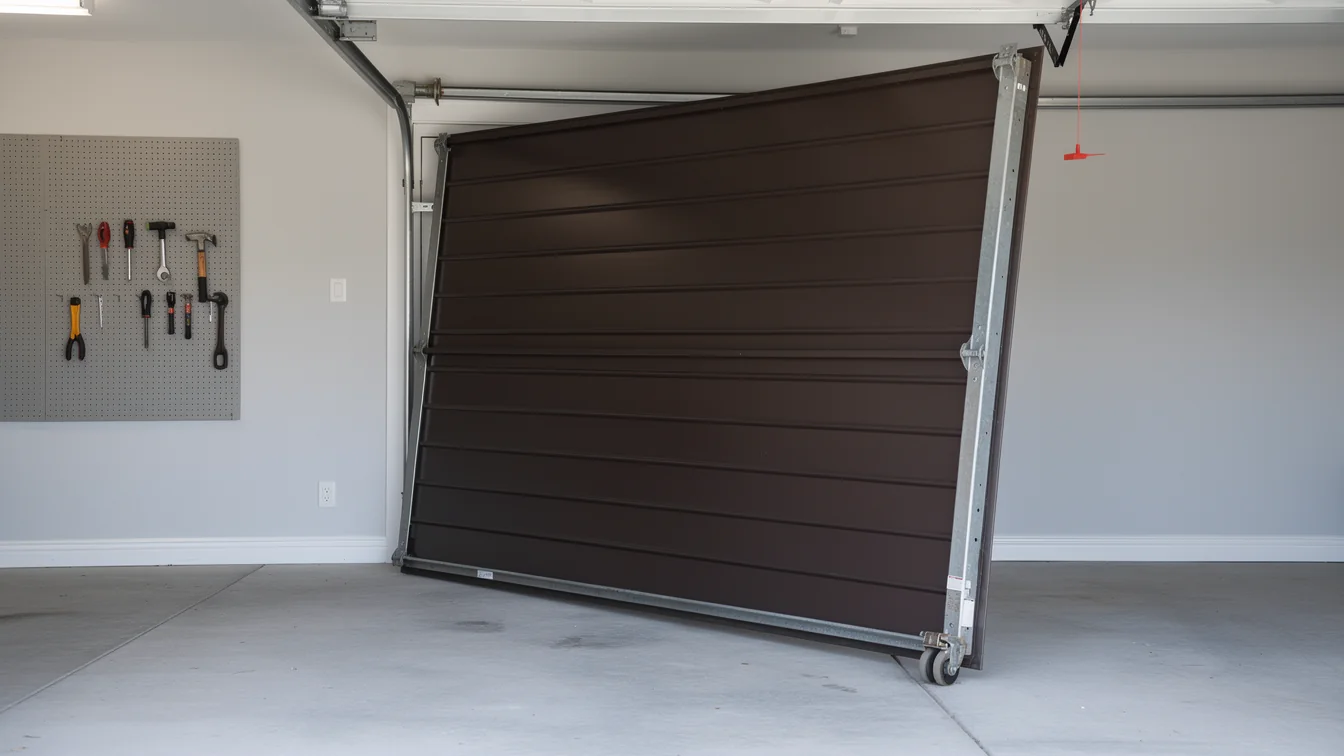
Why a Door Goes Off Track in a Dunwoody Garage
Dunwoody's 1960s-70s housing stock and cold-moderate winters push tracks and rollers out of line. Here's what actually causes it and where to check first.
- Repairs & new doors
- Springs & openers
- Serving 7 nearby communities
What Local Conditions Do
Most of the garage doors we look at in Dunwoody sit on homes built between 1951 and 2007, with the bulk of that stock going up in the 1960s and 70s. That matters because the track brackets and jamb hardware from that era were set for the original door weight - thinner steel, no insulation layer. When a homeowner swaps in a heavier insulated door decades later without touching the track mounting, the rails flex a little more on every cycle. Add a cold-moderate climate where temperatures swing enough to shrink and expand the wood jambs seasonally, and the lag screws holding the track brackets work loose over the years. It's slow. Nobody notices until the door binds on one side and a roller pops clear of the rail. This isn't a defect in the door - it's the track hardware aging against a frame that moves a little every winter and settles back a little every spring.
The Situation
In a service area with roughly 56,735 owner-occupied houses sitting inside a broader footprint of 144,349 households, we see the same pattern across dozens of the named subdivisions and pockets around Dunwoody: original track hardware, original brackets, a door that's been replaced once but the rails never were. A door built when the house went up in, say, 1978 - the median year for this stock - was hung plumb to a frame that has since shifted slightly with decades of freeze-thaw cycling typical of a cold-moderate band. The track itself doesn't wear out so much as it stops being square to the door. One side droops a sixteenth of an inch, then a quarter inch, and the rollers start riding the edge of the rail instead of the center.
Where People Go Wrong
The common mistake is treating an off-track door as a cable or opener problem first. People replace the opener, or tighten the chain, and the door still binds because the track bracket is the actual issue - loose at the stud, not loose at the motor. Another mistake specific to older stock here: homeowners re-torque the existing lag bolts into the same worn holes in jamb wood that's had forty-plus years of seasonal movement. The bolt holds for a week and then the whole bracket walks again. On homes from the 1960s-70s wave especially, the jamb wood itself is often the weak point, not the hardware bolted to it.
What to Look At First
Before touching the opener, check the track brackets at the top and sides of the frame - look for daylight between the bracket plate and the jamb, or bolts you can wiggle by hand. Run the door manually with the opener disconnected and watch whether one side lags the other by more than an inch; that's a bent rail or a dropped bracket, not a spring issue. We won't pretend every off-track call is a quick fix - if the jamb wood has gone soft from decades of moisture cycling, no amount of re-bolting the bracket holds for long, and that's a carpentry repair before it's a garage door repair. We'll tell you straight when that's what you're looking at instead of selling you a track adjustment that won't last the season.
Frequently asked questions
Why does my door only go off track in winter?
In a cold-moderate climate like Dunwoody's, jamb wood contracts in cold weather and expands again in warmer months. If the track brackets are already loosening with age, that seasonal movement is often what finally pushes a roller off the rail, which is why people notice it more in winter.
Is an off-track door always a spring problem?
No. Springs control tension and balance; the track controls the path the rollers follow. On older Dunwoody-area homes we often find the real issue is a loose or bent track bracket, not the spring, even though a binding door can feel similar from the opener side.
My house is from the 1970s - is that relevant?
Yes. A lot of the housing in this area dates from that decade, and track hardware from that build era was sized for lighter, uninsulated doors. If a heavier door went in later without upgrading the track mounting, the rails take more stress on every cycle than they were built for.
Related garage door services in Dunwoody
More garage door guides
Book garage door service in Dunwoody
Call now or request a quote - tell us what the door is doing and where you are.